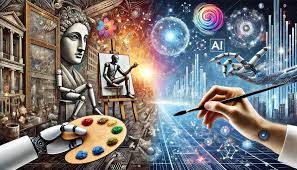
Artificial intelligence creates art by analyzing millions of existing images of different patterns, styles and structures to generate new images from text prompts. Because of this, it steals opportunities from artists and lessens human creativity.
AI threatens the livelihood of human artists and poses new threats to originality among people.
First and foremost, by AI generating thousands of images rapidly without consent with its owner, it makes it harder for human artists to get recognition. This reduces the perceived value of human art and instead looks up to AI for its creations instead. Furthermore, by AI being able to mimic performers’ voices and faces, this raises serious risks for voice actors and performers for someone pretending to be them. It also creates issues of AI generated songs rather than the true art of human singers and artists. As AI becomes more increasingly advanced, its capabilities for “creative” output is growing which is creating human talent to be irrelevant. According to the author, RJ Mackenzie, “Modern generative AI models can make ‘art’ without the direct involvement of artists. The technology impacts not just gallery-bound art, but the vast variety of media that many professionals create and sell to earn a living. AI-generated graphic designs, text, and other content allow individuals or businesses to sidestep these professionals entirely.” This demonstrates how AI is approaching more conflict towards artists where it threatens their jobs and creativity. More people are starting to develop fears of losing their job that involves art due to AI being able to steal human creativity. This is causing future generations to decline in job opportunities that consist of creative artwork.
Despite the rising issues occurring, many people think that it is a positive thing and it is very beneficial due to its abilities to rapidly produce images. However, AI still takes away from the creativity of artists and does more damage than good. By stealing artists’ work from thousands of different images, it not only steals art from other artists without consent, but it also takes away the uniqueness of art that only humans create. Without the demand for art, this will lessen artists and singers because of AI stealing these opportunities away from them.
There are many ways that people can go about this issue. Firstly, restricting AI to use for educational purposes rather than stealing originality will turn it into a resourceful thing rather than taking away from art. By not allowing AI to generate new images based on other existing images, it will strengthen legal protections through copyright enforcement. Furthermore, demanding that AI companies disclose training datasets and instead use only licensed content will prevent the stealing of art. By promoting that human creativity is significant, it will bring artists together instead of decreasing jobs in the art industry. If artists embrace the uniqueness of their art that AI can’t replicate, it will teach people that art is structured by humans not artificial intelligence.
Overall, AI is increasingly growing where it is becoming something that could potentially destroy human artists and their careers. This issue will be ignored if it is continued to not be brought to attention.